
Arrest Warrants in Brunswick County
An arrest warrant is criminal process, which means it authorizes an arrest only after a legal review. It is not a summons, and a summons simply directs someone to appear. A search warrant is different too, since it authorizes a search. Depending on the matter, Brunswick County cases run through Circuit Court, General District Court, JDR, or a magistrate. Virginia Code §§ 19.2-71 and 19.2-72 set out who may issue criminal process and the sworn complaint and probable-cause steps that can apply. Ask the issuing clerk what exact process sits in the file. A case entry alone does not prove a current warrant. Search OCIS by name, case number, or hearing date, then call the court shown in the result.
Brunswick County Arrest Warrant Complaints and Probable Cause
Every issuance path starts with a complaint or other authorized information. Virginia law names which judges, clerks in specified circumstances, and magistrates may issue process. Section 19.2-72 lays out a sworn complaint and a probable-cause examination, and felony complaints from non-law-enforcement complainants carry extra written requirements. The statute explains process, though. It is not a public list of Brunswick County arrest warrants. If a document or a portal result raises a question, ask the clerk which official issued it and what the court record shows. A case entry alone never proves a warrant's current status. Read Virginia Code § 19.2-72 for the probable-cause procedure.
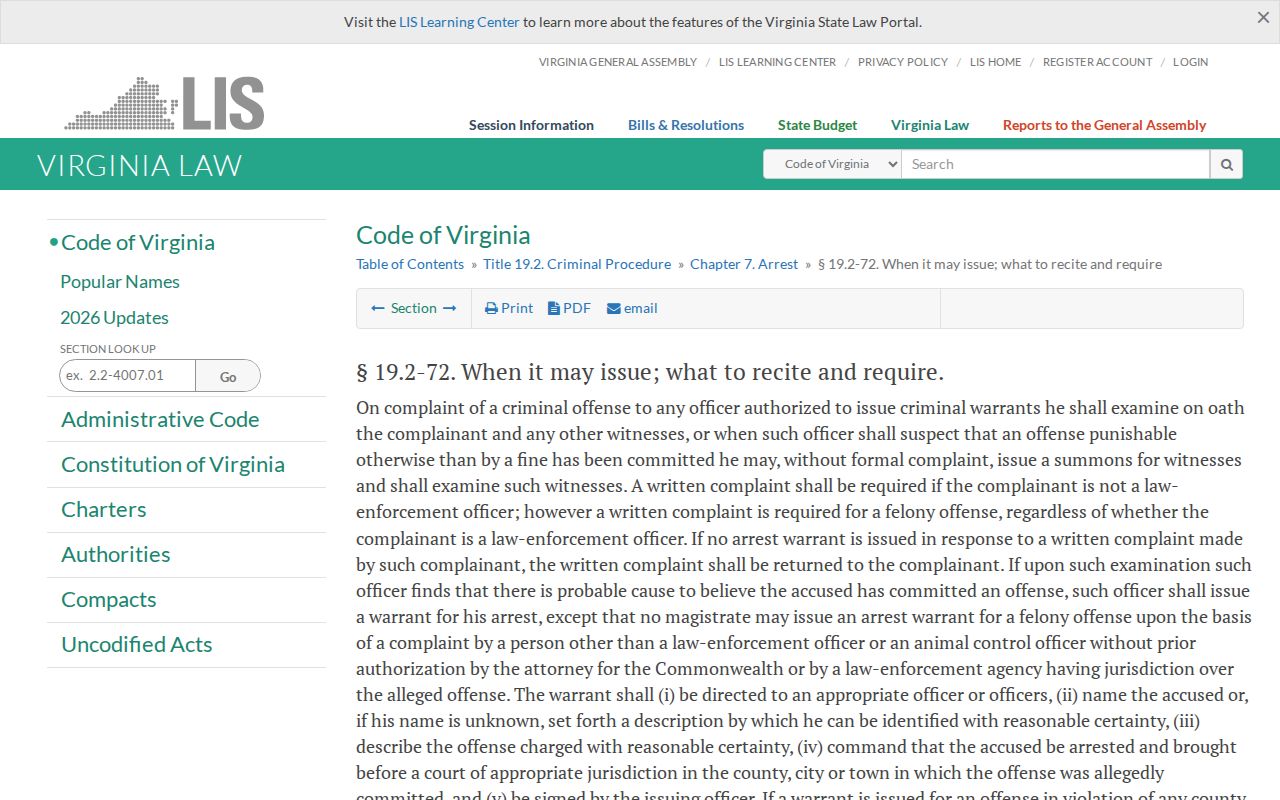
The statute capture supports the process description, not a person-specific warrant search.
What a Brunswick County Arrest Warrant Contains
A Brunswick County warrant or its court record may identify the issuing court, case number, process type, charge, issue date, and any bond or next-step information the court releases. Some fields sit in an agency return rather than the public docket. Sealed and juvenile matters follow different access rules. The table here shows field types to ask about, not a real person or a real case.
| Case or process number | Sample only: court-issued number |
|---|---|
| Issuing court | Locality and court level that holds the file |
| Charge or statute | Text as recorded by the court |
| Issue or complaint date | When process was entered, if displayed |
| Bond or hold | Use only the official court or magistrate entry |
| Service return | May be held by the executing agency |
Ask the clerk what each field means before taking action.
Brunswick County Arrest Warrant Issuance Officials and Court Files
The right issuing official depends on the case and its statutory setting. Circuit Court handles felony trials and the most serious criminal matters. General District Court takes misdemeanors, traffic, and preliminary felony hearings. JDR covers juvenile, domestic, and support cases. Magistrates may issue arrest warrants and hold bond hearings. Brunswick County's Clerk's Circuit Court page names Jacqueline S. Morgan and places the office at 216 N. Main Street in Lawrenceville, while the combined court office serves GDC and JDR at the courthouse. For a status question, use the court named on the paper rather than picking an office by town. Read Virginia Code § 19.2-71 for the officials authorized to issue process, then confirm the authority in the case file.
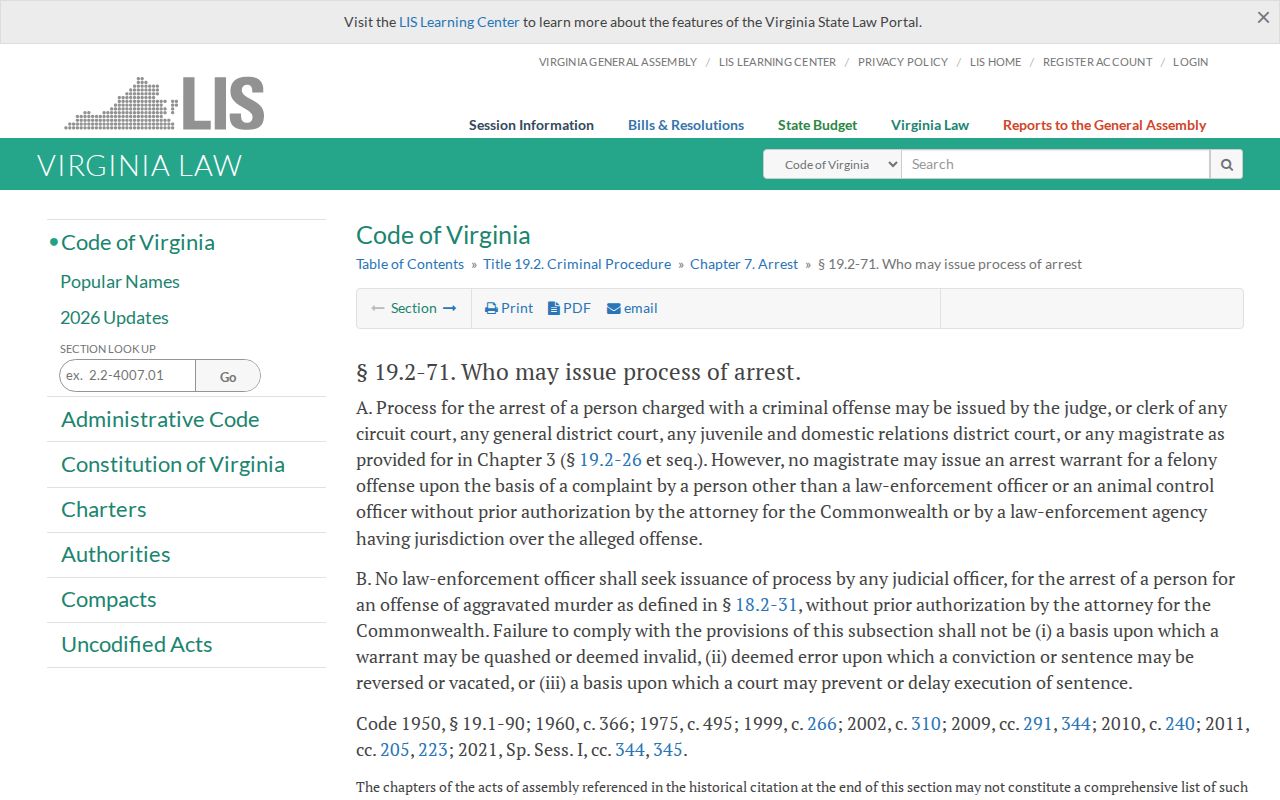
Virginia Code names the issuing roles in Brunswick County; the case file shows which authority actually acted.
How Brunswick County Arrest Warrants Are Served
The court creates the process record, but an executing agency handles service or return. Brunswick County Sheriff's deputies serve criminal and civil warrants, and county dispatch also lists Lawrenceville, Alberta, and Brodnax police, Virginia State Police, and other public-safety agencies. The named agency can differ from the court holding the docket. The Sheriff's Special Response Team page describes high-risk response capabilities. That is operational information, not a public lookup channel. Tactical details will not confirm a court date or process status. Ask the clerk about issuance and the agency about service routing. Never approach an officer or interfere with service. See the official Sheriff Special Response Team page for its public description.
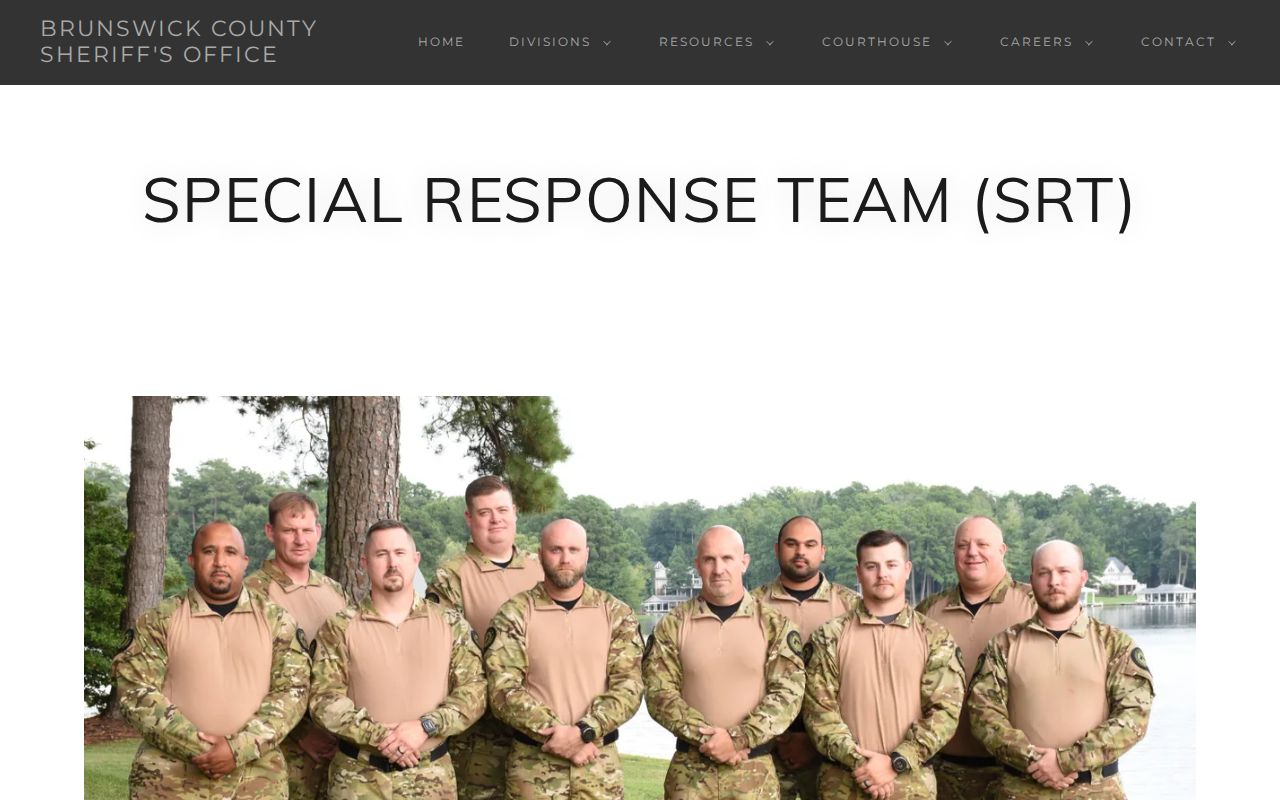
The Brunswick County page gives a broad agency description without naming any active operation or person.
Brunswick County Arrest Warrant Service Records Differ From Court Status
The Circuit Clerk or the combined district-court clerk holds the court file. The Sheriff or another serving agency may hold a service return, an agency report, or public policy instead. A phone answer from one office may not include the record held by another, which is why a reader asking whether a Brunswick County warrant is "in the system" often gets a split answer. For adult arrestee identity or status, Virginia FOIA has a specific rule, and investigative materials can be treated differently. Juvenile, sealed, expunged, victim, source, and undercover information may be restricted. Ask for a public procedure or an existing non-exempt record. Read Virginia Code § 2.2-3706 for the adult arrest and investigation-record access rules.
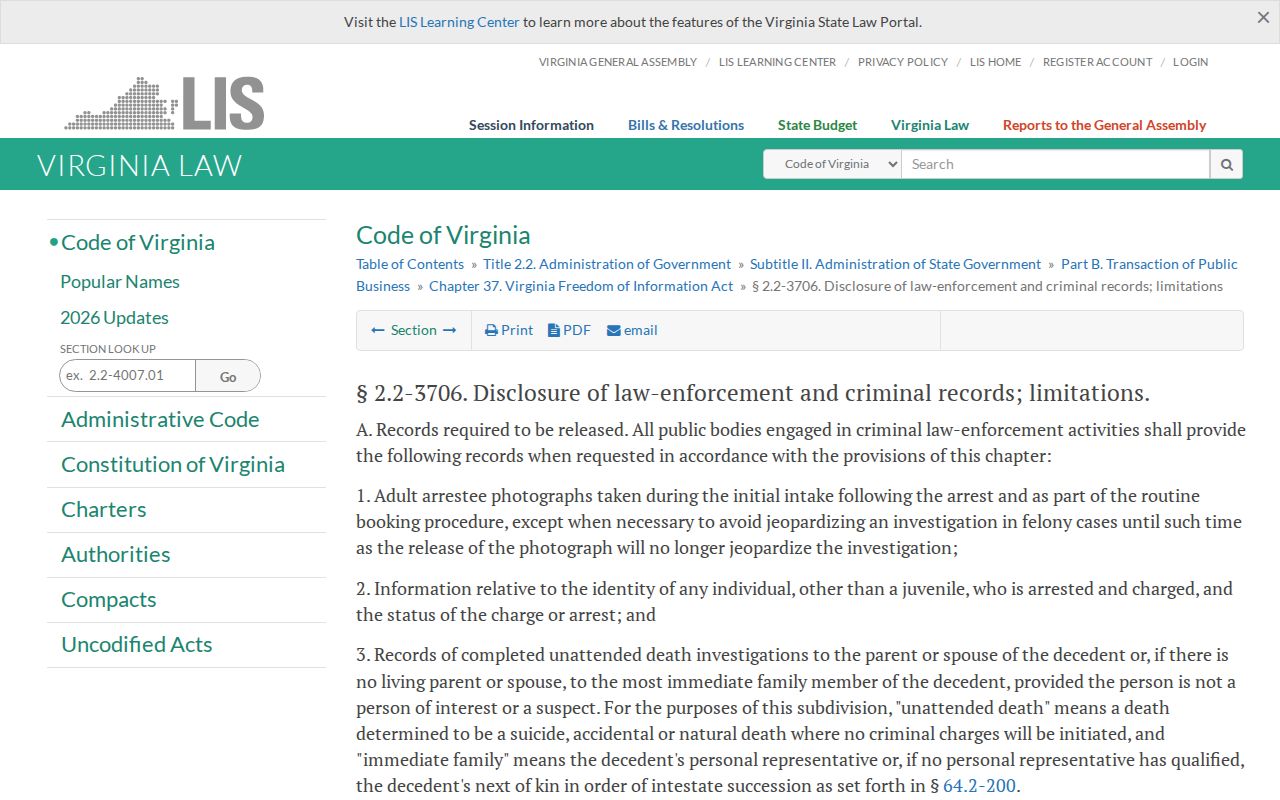
The law distinguishes basic adult arrest information from protected investigative files.
Arrest Warrant vs Summons vs Bench Warrant
These labels describe different routes. An arrest warrant follows a criminal complaint and a probable-cause process. A summons orders an appearance without the same immediate arrest authority. A bench warrant commonly follows a missed court appearance or an order, though Virginia records may use capias or FTA language instead. In Brunswick County, ask whether the process came from a new complaint or from the court handling an existing case. Traffic summonses carry charge-specific rules too. The clerk can explain whether an appearance or another filing is needed.
| Process | Common purpose | First status contact |
|---|---|---|
| Arrest warrant | Criminal arrest after required review | Issuing court clerk |
| Summons | Directs appearance or response | Court named on the summons |
| Bench warrant or capias | Court process tied to an obligation | Underlying court clerk |
| Search warrant | Authorizes a search | Not a personal arrest lookup |
Brunswick County Federal Warrants Use a Separate Route
Federal warrants do not show up in Virginia OCIS, which tracks only state and local court records. Brunswick County sits in the Eastern District of Virginia, Richmond Division. That puts federal process on a different track. A sealed complaint may start it. The U.S. Marshals Service or another federal agency may execute the paper. Searching public dockets tells you only so much; a clean result does not rule out a federal warrant. PACER is the official federal docket service, and CourtListener's RECAP archive carries some public material, though it stays incomplete. Anyone worried about a federal warrant in Brunswick County should talk to federal counsel or confirm the route through official court contacts rather than act on a partial search. The U.S. Marshals Eastern District page lists courthouse contacts for federal warrant-execution routing.
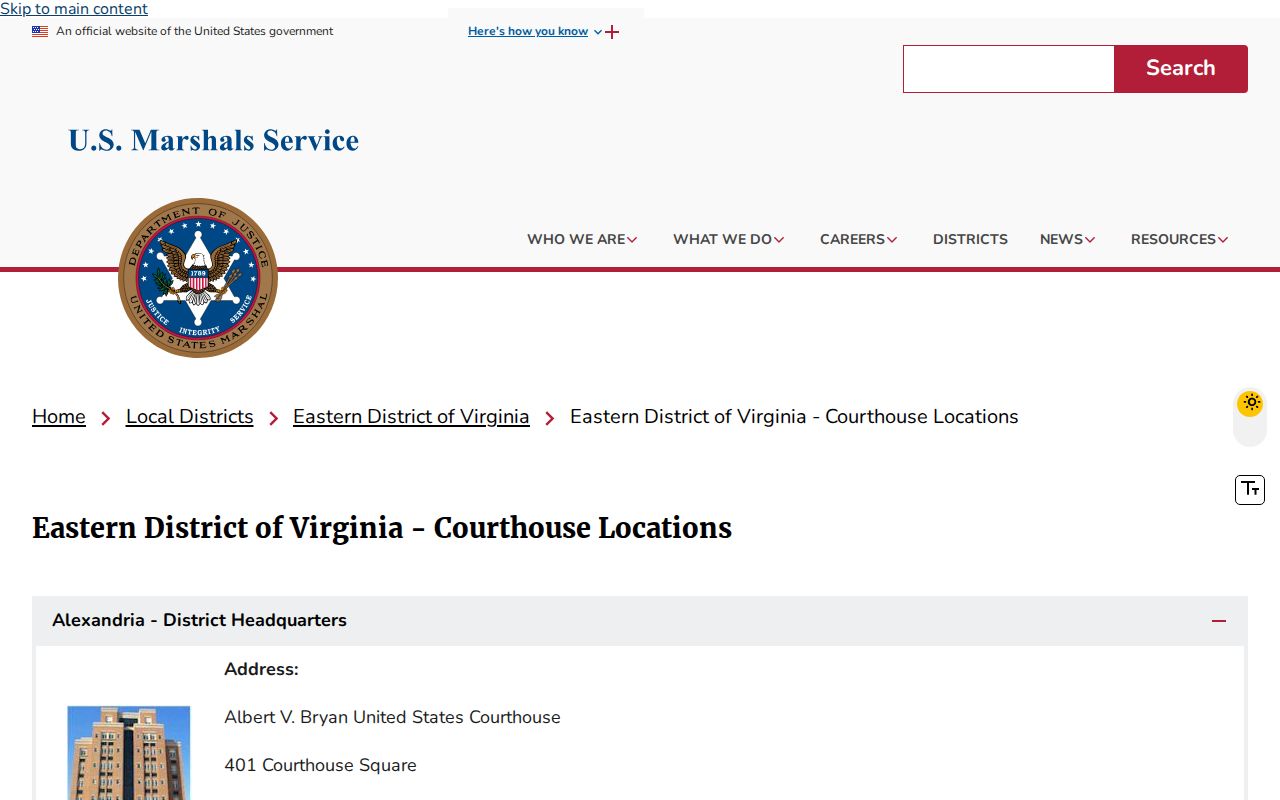
Federal process sits outside Brunswick County's usual court search. The Richmond courthouse page posts the location and current entry details.
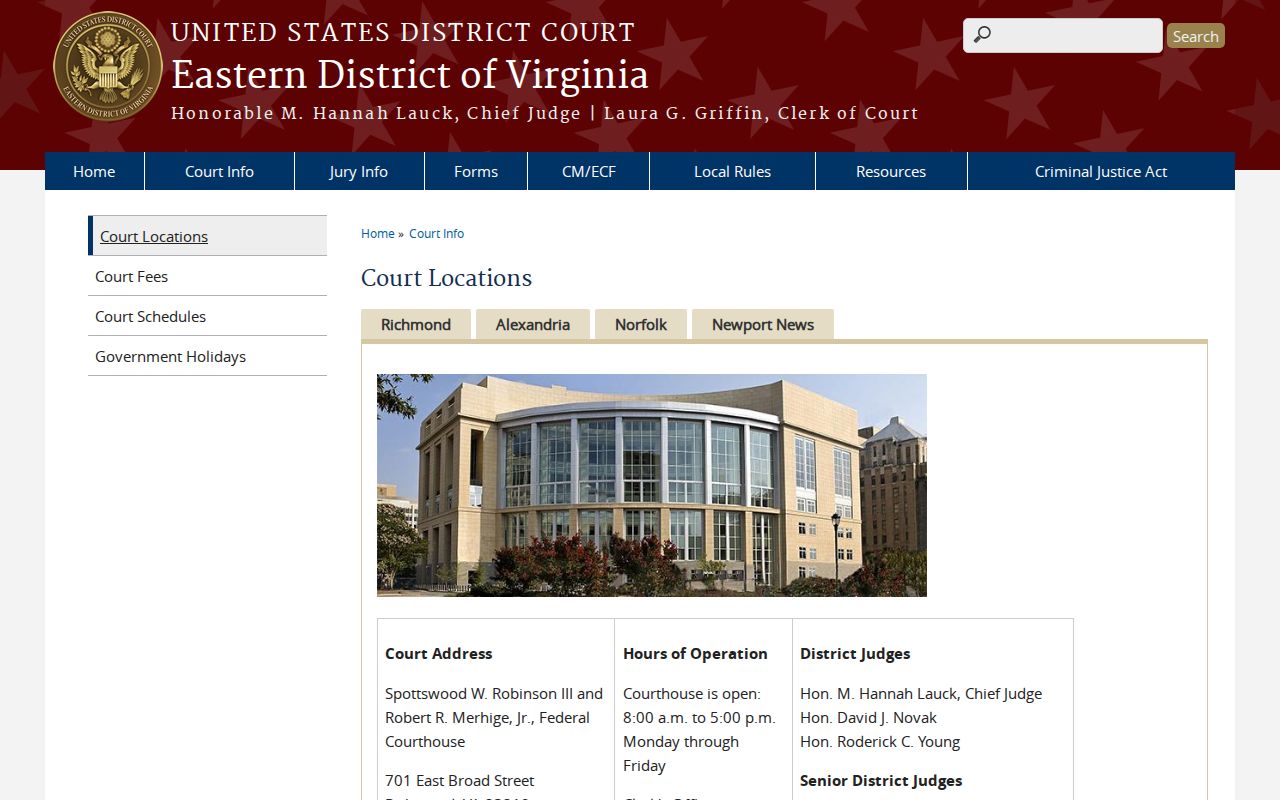
The federal courthouse sets its own entry and screening rules, apart from Brunswick County practice. Use the official PACER service for public federal dockets and filings.
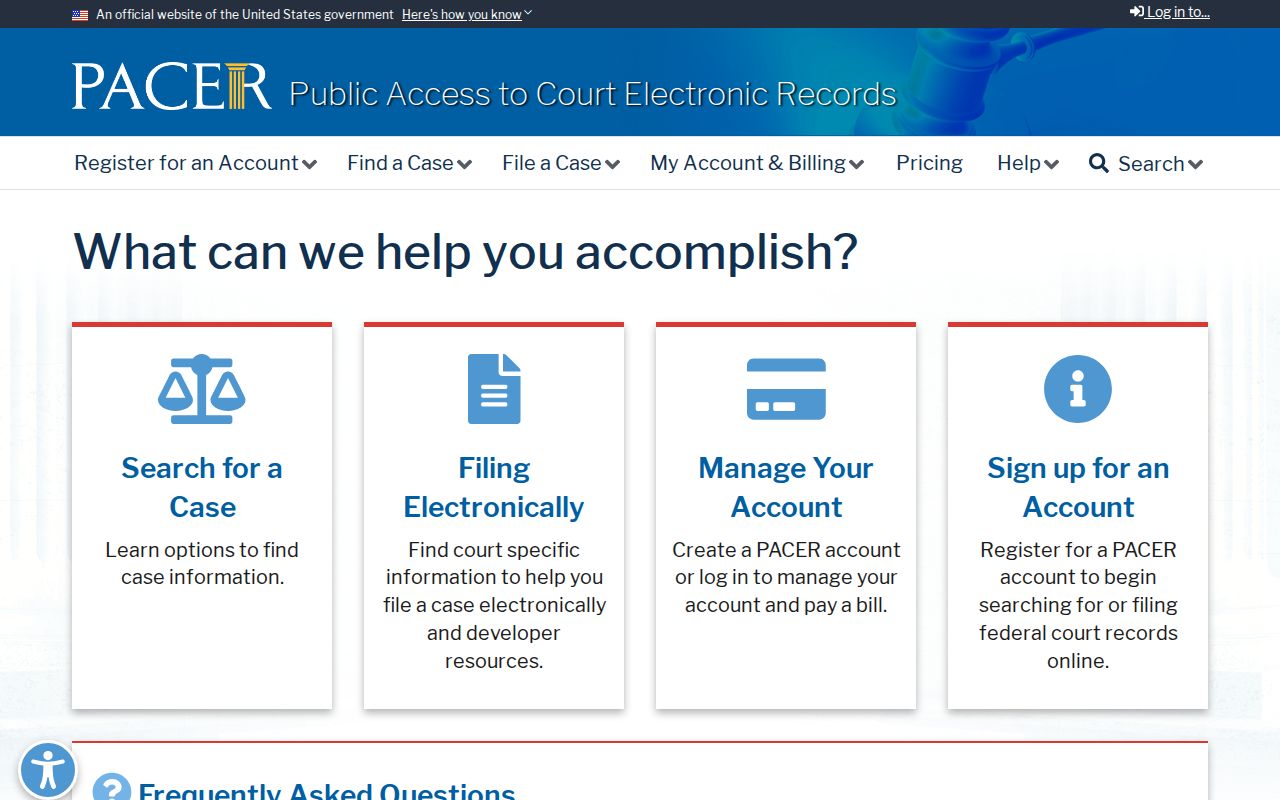
A public docket result is not a sealed-warrant status check.
What to Do If There's a Warrant for You
Suspect a Brunswick County arrest warrant? First identify the court and the process, then pick a step. A Virginia lawyer can advise on voluntary appearance, motions, bond, or another route. Ask the issuing clerk whether counsel can coordinate an appearance. No local office promises a walk-in surrender or a universal bond option. If an arrest happens, Virginia Code § 19.2-80 requires prompt presentation before a judicial officer, and a magistrate may set or address bond. Reach Magistrate Services at (434) 949-6853 and Meherrin River Regional Jail at (434) 949-6700 only after the court confirms those are the right contacts. Confirming the warrant directly with the issuing court beats guessing at what a listing shows, and the clerk can tell you whether an appearance, motion, or bond posting fits your case.
Confirm first: Ask the court about location, hours, identification, booking, bond, and the document that will confirm the process changed.
Hang onto the order, the bond paperwork, and the next hearing notice. Clearing the Brunswick County warrant does not itself decide the underlying case.
Brunswick County Arrest Warrant Fees Are Not Published
No published fee covers a Brunswick County warrant search, warrant recall, bond schedule, or surrender timetable. One $10 charge does appear in Brunswick's DC-210 payment-agreement policy, but only after the first 90 days, and it is not an arrest-warrant fee. Paying a court balance, in other words, does not recall a separate warrant. Ask the clerk of the issuing court directly. A payment, a motion, a new date, bond, or an appearance may each be what the case needs. Get a receipt. Ask when the public case portal should show the update. A straight answer from the issuing court beats an old listing or a third-party search result every time.